

Updated October 2026
As cooler weather and, ugh, should I say it, snow roll in across the states, many riders head west to California's most scenic motorcycle routes for the ultimate refuge. And though riding cross-country is always amazing, getting stuck in snow or below-freezing temps can kill the mood fast (and it's downright dangerous).
The best solution? Fly out to Los Angeles or San Diego, and rent a motorcycle from Twisted Road. The rides are endless, and California offers something for just about any type of rider.
Here are the top 11 California Motorcycle Routes we recommend.
1. Pacific Coast Highway
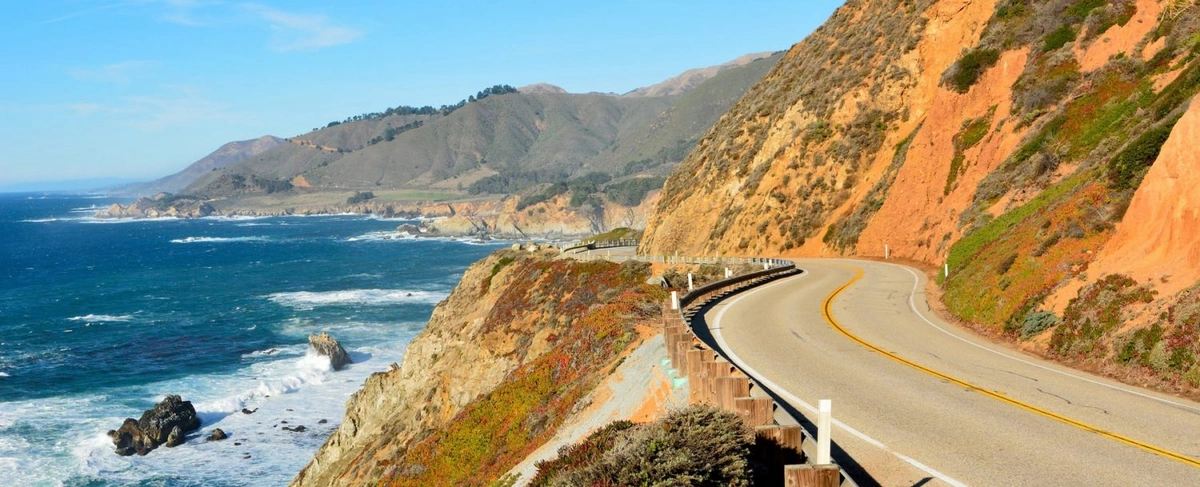
The Pacific Coast Highway is the ultimate California motorcycle road trip, and in 2026 it's fully open through Big Sur for the first time in three years. Highway 1 and the coastal route that continues north on U.S. 101 run roughly 790 miles from San Diego to the Oregon border. It's a bucket-list ride for a reason. Imagine cruising along the Pacific coastline with the ocean breeze in your face, winding through beach towns and rugged cliffs, and stopping at lookouts over the crashing surf.
The stretch through Big Sur is the one everyone comes for, whether you're on a Harley cruiser or a Ducati Multistrada. The highway clings to the cliffs with the Santa Lucia Mountains on one side and the Pacific on the other, and it's a demanding ride with hairpin turns, narrow shoulders, and tourists braking mid-corner for photos. Caltrans reopened the road at Regent's Slide in January 2026 after a closure that lasted nearly two years, which means you can finally ride Carmel to Cambria without a detour. Storms can still close it for a day or two in winter, so check Caltrans QuickMap before you commit to the full run.
The views are worth every mile. You'll see waterfalls dropping to the beach at McWay Falls, towering redwoods, and empty coves, so take your time. Stop at the Bixby Creek Bridge, the 1932 concrete arch that is the most photographed span on the coast, then grab lunch at Nepenthe for cliffside views that have been serving riders since 1949. Fuel is sparse between Carmel and Cambria, so fill up before you enter Big Sur.
Pick the bike for the coast, not the canyon. A cruiser or bagger suits the long, scenic sections, while a sport tourer or ADV bike handles the tighter Big Sur corners with less effort. Twisted Road hosts list bikes at both ends of the ride, in San Diego and Los Angeles for a northbound run, and our San Francisco motorcycle rental adventure guide covers the northern half if you'd rather ride it south. The PCH is a ride you'll never forget. It's the quintessential California motorcycle experience.
2. Angeles Crest Highway
Angeles Crest Highway is the best technical road within an hour of Los Angeles, with endless twists and turns and more than 7,000 feet of elevation. This 66-mile stretch of State Route 2 snakes through the San Gabriel Mountains from La Cañada Flintridge to Wrightwood, topping out at Dawson Saddle. Sport bike riders love it for its challenging curves and sweeping vistas, and on a weekend morning you'll share it with half the sportbikes in Southern California.
The road starts in La Cañada Flintridge, just outside Los Angeles, where some of our top hosts, including Ari Henning and MotoCalifornia, are based. From there it climbs into the Angeles National Forest with views back over the LA basin and out across the Mojave Desert. The first 30 miles are the most technical, with tight switchbacks, blind crests, and hairpins stacked one after another. It's not for the faint of heart, but if you've got the skills it's an adrenaline rush like no other.
Know the road conditions before you go. Newcomb's Ranch, the 1939 roadhouse that served as the informal headquarters for riders on this highway, has been closed since 2020, so carry water and food. Winter storms in late 2025 washed out sections of the upper highway, and as of late September 2026, Caltrans still has the road closed from just east of Newcomb’s Ranch to Vincent Gap with no reopening date. That turns the ride into an out-and-back on the lower 30 miles, which happens to be the best 30 miles anyway. Check Caltrans QuickMap the morning you ride.
The Angeles Crest Highway tests your riding skills. Ride within your limits, leave room for the cyclists and the occasional car on the wrong side of the line, and read our 10 essential motorcycle safety tips if it's been a while since you rode a road this tight. The views and the thrill make it all worth it, and the top 15 most popular rentals on Twisted Road include several bikes built for exactly this kind of road.
3. Palomar Mountain
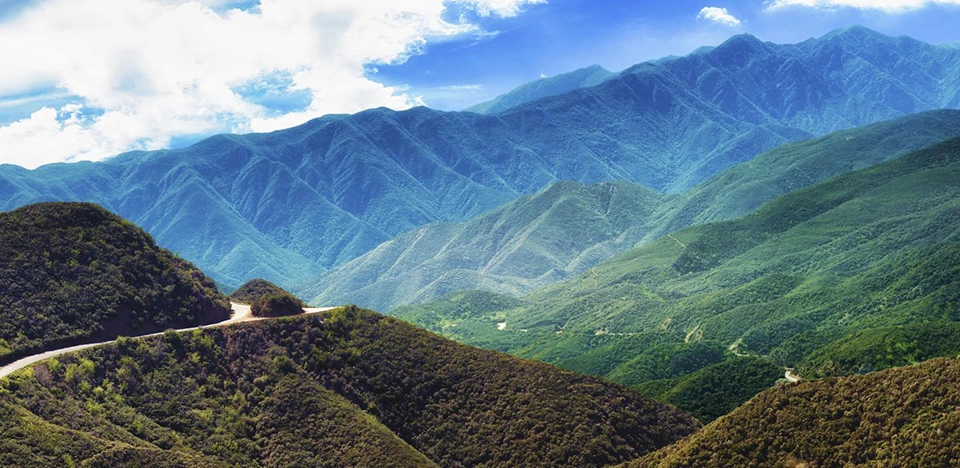
Palomar Mountain is the best motorcycle road in San Diego County, and it's still a hidden gem for out-of-state riders. Local riders love it. Tourists overlook it. The South Grade Road, County Route S6, packs more than 20 hairpins into about seven miles as it climbs toward the 5,500-foot summit, and the pavement is well maintained with turns that stay predictable corner after corner. On a clear day, you can see all the way to the ocean from the top.
The ride up is a series of tight curves and switchbacks that let you find a rhythm, and the ride down is just as much fun. Most local riders go up the South Grade and down the East Grade (County Route S7), which is faster and more flowing, then loop back on Highway 76 past Lake Henshaw. Watch the drop-offs, because guardrails are scarce, and watch the sheriff, who patrols the mountain on weekends. Crossing the center line here is the fastest way to end a good day.
Take a break at Palomar Mountain State Park and walk one of the trails through the cedars and oaks. A few miles farther along the ridge is the Palomar Observatory, home of the 200-inch Hale Telescope, which was the largest telescope on earth for nearly 30 years and is still open to visitors most days. Palomar Mountain is a must-ride for any motorcyclist in Southern California, and it's an easy day trip on a bike rented in San Diego. It's a hidden treasure that's worth seeking out.
4. Sacramento River Delta
The Sacramento River Delta is the most relaxed ride on this list, and it's the one to pick when you want scenery without a workout. This network of waterways and levee roads is a favorite among cruiser riders. The roads along Highway 160, the River Road, run flat and mostly straight atop the levees with water on both sides, so you can sit back and enjoy the view. Our cruiser buying and renting guide explains why a Harley-Davidson bagger is the right tool here.
The delta is home to small towns and marinas, each with its own character. Locke is a National Historic Landmark built by Chinese immigrants in 1915 and still looks the part; the 1927 Ryde Hotel is a Prohibition-era stop worth a look, and Isleton and Rio Vista have waterfront restaurants for fresh seafood and a cold drink. Take the free Real McCoy II or J-Mack ferry across the sloughs for a few minutes of riding on water, something you can't do on any other route in this guide.
Take a detour to Brannan Island State Recreation Area for a picnic and a swim. The park offers wide views of the delta and the surrounding farmland, and it's a good turnaround point for a half-day loop out of Sacramento. The Sacramento River Delta is a great place to unwind and enjoy the simple pleasures of motorcycling. It reminds us that sometimes the best rides are the ones where you can relax and take in the scenery.
5. June Lake Loop
The June Lake Loop is a 16-mile scenic byway in the Eastern Sierra that passes four alpine lakes, and it's the easiest great ride off Highway 395. State Route 158 leaves 395 south of Lee Vining, swings past Grant Lake, Silver Lake, Gull Lake, and June Lake, and rejoins the highway near June Lake Junction. It's a popular destination for motorcyclists looking to escape the summer heat, and at nearly 7,600 feet the air stays cool even in August.
June Lake is the largest and most developed of the four, with restaurants, lodging, and a brewery that fills with riders on summer weekends. The ride mixes sweeping curves and tight turns with the Sierra crest filling your visor, and traffic is usually light outside of holiday weekends. Take a detour to June Lake Beach for a swim and a picnic. The Mono County visitor page covers lodging and seasonal closures, and the northern half of the loop closes to vehicles once the snow arrives.
Pack for the altitude. Mornings start cold even in July, and our cold weather motorcycle gear guide covers the layers that make an alpine ride comfortable. A sport touring motorcycle is the ideal partner for the long 395 miles that bookend this loop. The June Lake Loop is a hidden gem that riders often overlook when heading to more popular destinations like Yosemite. But trust me, it's worth the detour.
6. Yuba Pass to Sierra Valley
Highway 49 over Yuba Pass is the best way to ride California's Gold Rush history, and the pavement is as good as the scenery. The ride from Downieville to Sierra Valley takes motorcyclists through the heart of the northern Sierra Nevada, following the North Yuba River through a deep canyon before climbing to the 6,710-foot pass and dropping into one of the largest alpine valleys in the state. AAA's Via magazine calls this stretch the Lost Sierra for a reason. Most riders never find it.
As you wind your way up Highway 49, you'll be treated to vistas of the surrounding peaks and the river far below. The road itself is a joy to ride, with plenty of twists and turns to keep things interesting and almost no traffic once you're past Nevada City. Sierra City sits at the base of the 8,591-foot Sierra Buttes, which tower more than 4,000 feet over the town, and the view from the road is one of the best in the range.
One highlight of this route is the chance to stop and explore the historic towns along the way. Downieville, at the confluence of the Downie and North Yuba rivers, has well-preserved buildings from its 1849 boom and friendly locals always happy to share a story or two. Sierra City is smaller and quieter. On the far side of the pass, Sierra Valley spreads out across nearly 600 square miles of ranchland at about 4,850 feet, and the ride through it feels like Montana.
The nearest Twisted Road bikes are in Sacramento, about two hours away, and a BMW GS or RT is a good choice for the mix of canyon and open valley. Plan this one for June through October, because Yuba Pass is a snow park in winter. If you're building a longer Northern California loop, this road pairs well with Highway 36 in section 11.
7. Death Valley National Park
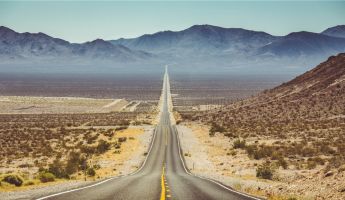
Death Valley is California's most demanding ride, and from November through April it's also one of the best. The park offers vast desert landscapes, winding roads, extreme temperatures, and silence you can hear. This route suits experienced riders looking for an off-the-beaten-path adventure. We'd recommend an ADV bike like a BMW R 1250 GS or a Honda Africa Twin, and our modern adventure bikes guide explains which class fits your experience.
One of the park's most iconic rides is the climb to Dante's View, which offers panoramic views of the valley from 5,476 feet. The road to the viewpoint is a thrilling climb with hairpin turns and steep drop-offs that will get your heart racing. Another must-see destination is Badwater Basin, the lowest point in North America at 282 feet below sea level. Riding from Dante's View to Badwater drops you nearly 5,800 feet in under 50 miles, which no other road in the country can match.
The ride to the basin takes you through some of the most desolate and otherworldly landscapes you'll ever see, with salt flats and jagged rock formations stretching to the horizon. Add the nine-mile Artists Drive loop on the way back for the painted hills. Entry is $25 per motorcycle and good for seven days. Fuel is available only at Furnace Creek, Stovepipe Wells, and Panamint Springs, so never pass a pump.
Respect the heat. Summer temperatures routinely pass 120 degrees, and the park's own advice is to stay off the valley floor in the afternoon heat from June through September. Ride it in the cooler months, carry more water than you think you need, and wear vented gear from our hot weather gear guide for men or our warm weather gear guide for women. Our ADV gear guide covers the rest of the kit.
8. Joshua Tree National Park
Joshua Tree is the easiest national park ride from Los Angeles, and spring is the time to do it. The park sits where the high Mojave Desert meets the lower Colorado Desert, and its winding roads offer a scenic, open ride with almost no traffic on weekdays. This route is perfect for riders looking to escape the city and experience the high desert's beauty, and it's a two-hour ride from the Los Angeles hosts where most Twisted Road bikes in Southern California live.
As you ride through the park, you'll be surrounded by its namesake trees, a type of yucca that can grow up to 40 feet tall. Park Boulevard runs about 25 miles between the West and North entrances past Hidden Valley and the boulder piles at Jumbo Rocks, and the roads have plenty of room to lean into the curves and open the throttle within the park's speed limits. Take the side road to Keys View, where the ridge drops nearly a mile into the Coachella Valley and you can trace the San Andreas Fault across the valley floor.
One of the best times to visit Joshua Tree is in the spring, when the desert comes alive with wildflowers and the temperatures are mild. Fall is nearly as good. Summer is brutal, with no shade and no services inside the park, so plan for a $25 motorcycle entry fee valid for seven days and carry all the water and fuel you'll need. No matter when you go, you'll find plenty of opportunities to stop and explore the park's hiking trails, rock-climbing routes, and scenic viewpoints.
9. Rock Creek Road to Mammoth Lakes
Rock Creek Road climbs to what many call the highest paved road in California, and it's the best 10 miles of pavement in the Eastern Sierra. The road leaves Highway 395 at Tom's Place, 25 miles south of Mammoth Lakes, and gains nearly 3,000 feet before it dead-ends at the Mosquito Flat trailhead above 10,200 feet. Pair it with the ride north to Mammoth and you get the heart of the Eastern Sierra in a single afternoon.
As you head up Rock Creek Road, you'll leave the highway noise behind within a mile and find yourself in a canyon of pines and granite. The road winds past mountain streams and Rock Creek Lake, where the resort's cafe is famous among riders for its pies, with plenty of places to stop and take in the views. The pavement is narrow and the corners tighten as you climb, and the air gets thin enough near the top to notice. Snow keeps the upper road closed until late May or June, so ride it from summer through early fall.
One highlight of this route is Mammoth Lakes, a year-round outdoor paradise offering everything from winter skiing and snowboarding to summer hiking and mountain biking. The town itself is a charming mountain community with great restaurants, shops, and lodging options, and Lake Mary Road out of town adds another climb to the lakes basin. Mammoth draws riders from all over the world, so if you're visiting from abroad, read our international riders guide, and if you're new to the platform, our step-by-step guide to renting on Twisted Road covers the rest.
10. Lake Berryessa to Napa Valley
The ride from Lake Berryessa to Napa Valley is the best way to combine motorcycling with wine country, and Highway 128 does the heavy lifting. The route offers a perfect blend of winding roads, lake views, and world-class wineries. Start in Winters, climb past Monticello Dam and its 72-foot Glory Hole spillway, then trace the shoreline of Lake Berryessa, which stretches 23 miles with 165 miles of shoreline. This route is ideal for riders who want a taste of California's famous wine country, so book a hotel and enjoy.
As you set out along the lake, you'll enjoy views of the water and the surrounding hills, with plenty of twists and turns to keep you on your toes. Past the lake, Highway 128 climbs through Capell Valley and drops into Napa Valley at Rutherford, with the Silverado Trail waiting on the far side. For a longer day, cut north through Pope Valley and over Howell Mountain before descending into St. Helena.
One of the best things about this route is the chance to stop and sample the region's famous wines, with many wineries offering tastings and tours. Ride first and taste after you've parked for the night, because California's DUI limit applies on two wheels and the Highway Patrol knows these roads. When you're ready to take a break from the saddle, you'll find great restaurants and lodging in Napa, St. Helena, and Sonoma.
Whether you're a wine aficionado or just want a scenic ride through some of California's most beautiful countryside, this route will satisfy you. It's an easy day from Sacramento or the Bay Area, and it fits neatly into the Northern California loop in our San Francisco motorcycle rental adventure guide. Make it a two-day trip and your second ride is on the house through One, Two, Free.
11. Highway 36, Red Bluff to Fortuna
Highway 36 between Red Bluff and Fortuna is California's best pure riding road, and most riders who finish it say the same thing at the gas pump. It runs about 140 miles from Interstate 5 in the Sacramento Valley to U.S. 101 near the Humboldt coast, and nearly all of it bends. Riders call it 140 miles of curves. Rider Magazine ranked it eighth in the country on its list of the 50 best motorcycle roads in America and gave it a nickname that fits, Serpent to the Sea. Nothing else in this guide packs this many corners into one day.
The road changes character four times. Leaving Red Bluff, you cross rolling oak country and a rollercoaster stretch of dips before the climb begins near Platina. The middle section crosses the Yolla Bolly and Trinity country on long ridgeline sweepers, tops out around 4,000 feet at South Fork Mountain Summit, and drops into tight canyon work around Mad River and Dinsmore that rewards patient throttle hands. West of Bridgeville the pavement runs beside the Van Duzen River through Grizzly Creek Redwoods State Park, where the trees close in and the air turns cool and damp before Fortuna. American Sport Touring calls the surface well paved end to end with clearly marked corners, which matches our experience, though summer brings construction zones with one-way traffic control.
Plan fuel like it matters, because it does. Fill up in Red Bluff or Fortuna before you start. Dibble Creek Outpost sits a few miles west of Red Bluff, and after that the only reliable stops are Dinsmore and Mad River, with roughly 90 miles of nothing in between. Cell coverage comes and goes for most of the route. Pack water, a snack, and a tire plug kit, and tell someone your plan. This is remote riding on a state highway, not a canyon run above a city.
Timing matters too. Late spring through fall is prime, and South Fork Mountain Summit can hold snow into April, so check Caltrans QuickMap the morning you leave. Cattle and deer wander the road in the ranch sections, and the Highway Patrol works the stretch near Red Bluff. Ride it west to east and you finish with the valley spread out below you. Ride it east to west and you finish in the redwoods with the coast 20 minutes away, which is our pick. Either way, a sport touring motorcycle or a mid-weight adventure bike is the right tool, and our guides to ADV motorcycle gear and cold weather motorcycle gear cover what to wear for the temperature swing between the valley floor and the summit.
Make a weekend of it. Fortuna sits 25 miles from the Avenue of the Giants, the 31-mile redwood road that Rider Magazine ranked ninth on the same list, so you can bag the eighth and ninth best roads in America before lunch on day two. Rider Magazine’s own Northern California loop links Highway 36 with the Avenue of the Giants, the Mendocino coast, and Highway 1 back toward the Bay. The closest Twisted Road bikes are in Sacramento, about two hours south of Red Bluff on I-5, and our San Francisco motorcycle rental adventure guide shows how to build a four-day Northern California loop from the Bay Area that ends on this road.
[New conclusion. Replaces the current closing lines at the end of section 10 (the "grab your helmet, hop on your bike, and raise a glass" paragraph). Insert directly after section 11.]
Which California Motorcycle Route Should You Ride First?
Ride the Pacific Coast Highway first if you've never been to California, Angeles Crest first if you want corners within an hour of Los Angeles, and Highway 36 first if you already know you're a rider who counts curves. That's the honest answer to the question every out-of-state rider asks us. California has more variety than any riding destination in the country, and the eleven routes above cover coast, desert, high Sierra, wine country, and the best mountain road in the state. Pick the one that matches your bike and time, then come back for the rest.
Most riders make the mistake of trying to see it all in one trip. The state is nearly 800 miles long, the Sierra passes close for half the year, and Death Valley will hurt you in July. Build each trip around one region.
A long weekend out of Los Angeles covers Angeles Crest, Palomar, and Joshua Tree. A week out of the Bay Area covers Napa, the Delta, Highway 36, and the redwoods. The Eastern Sierra, with June Lake, Rock Creek, and Yuba Pass, deserves its own week in late summer when every pass is open. Our list of 14 must-ride roads for movie buffs adds a few more if you still have days left.
Then there's the bike, which matters more here than almost anywhere else. A Harley-Davidson bagger is perfect for the coast and wrong for Angeles Crest. A BMW GS handles Death Valley gravel and Highway 36 sweepers in the same week. If you're not sure which one suits the roads you've picked, rent it before you commit.
Twisted Road hosts list bikes across the state, from the top 15 most popular rentals to specialists like MotoCalifornia, and every two full-price rides earn a free day through One, Two, Free. Here’s how it works. The road is already there. Go ride it.
FAQs
What is the best motorcycle road in California?
Highway 36 from Red Bluff to Fortuna, if you measure by corners, with about 140 miles of continuous curves and a top-10 national ranking from Rider Magazine. The Pacific Coast Highway wins on scenery, and the Big Sur stretch is the single most photographed piece of road in the state. Angeles Crest Highway is the best road within an hour of a major city.
When is the best time to ride motorcycles in California?
April through October covers almost everything, but the right month depends on the region. The coast and Southern California mountains ride well year-round, while the Sierra passes usually open between late May and early July and close with the first big storm in the fall. Desert routes like Death Valley and Joshua Tree are best from November through April. Check Caltrans QuickMap for closures before any mountain ride.
When do Tioga Pass and the other Sierra passes open?
It changes every year with the snowpack. Yosemite begins plowing Tioga Road around April 15, and the National Park Service says clearing usually takes one to two months, so a late May to late June opening is typical, with big snow years pushing into July. Sonora, Ebbetts, and Monitor passes follow a similar pattern. Plan Eastern Sierra routes like June Lake Loop and Rock Creek Road for July through September to be safe.
Is lane splitting legal in California?
Yes. California is the only state that fully allows motorcycles to ride between lanes of moving traffic, while a handful of other states permit only low-speed lane filtering, and the California Highway Patrol publishes safety guidelines for doing it. Keep the speed difference small, avoid splitting next to large vehicles, and don't split at all on winding mountain roads where cars can't see you coming.
Do you need a helmet to ride in California?
Yes. California has a universal helmet law, so every rider and passenger must wear a DOT-certified helmet regardless of age or experience. Our guide to motorcycle helmet laws by state covers what changes once you cross into Nevada, Arizona, or Oregon.
How many miles is Highway 36 and where do you get gas?
About 140 miles between Red Bluff and Fortuna. Fill up at either end, because reliable fuel in the middle is limited to Dinsmore and Mad River, with a gap of roughly 90 miles east of Dinsmore. Cell service is spotty for most of the route.
What kind of motorcycle is best for California routes?
A mid-weight adventure bike or sport tourer handles the widest range, from Highway 36 sweepers to Death Valley gravel to Angeles Crest hairpins. A cruiser is ideal for the Pacific Coast Highway, the Delta, and Napa, where the scenery matters more than lean angle. Rent the type that fits the region you're riding rather than forcing one bike to do everything.
Can I rent a motorcycle in California as a visitor from another country?
Yes. You need a valid motorcycle license from home, an International Driving Permit is recommended, and you'll pass a verification check when you book. Our international riders guide to renting a motorcycle in the USA walks through the whole process, and our step-by-step guide to renting on Twisted Road covers pickup, protection plans, and return.