

So many people who rent with Twisted Road ask me about helmets. They want to know if helmets are provided when they rent a motorcycle (they may be) and whether we require helmets for all renters (we don't).
When I started writing this article comparing Shoei and Arai helmets, I thought it would be easy. After all, we had already completed reviews on Quad Lock vs RAM Mount and Sena vs Cardo. But the more I researched, the more I realized that choosing the best motorcycle helmet was going to be a long and thankless task. I felt like I was embarking on one of life’s never-ending debates: Coke or Pepsi? Nature or Nurture? Good or Evil? And now, Shoei or Arai?
Shoei and Arai have become the best motorcycle helmet brands for a reason.

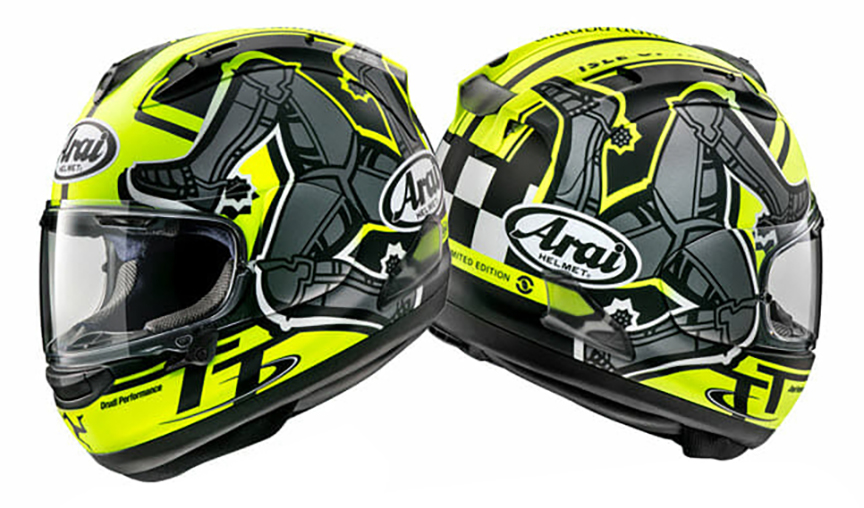
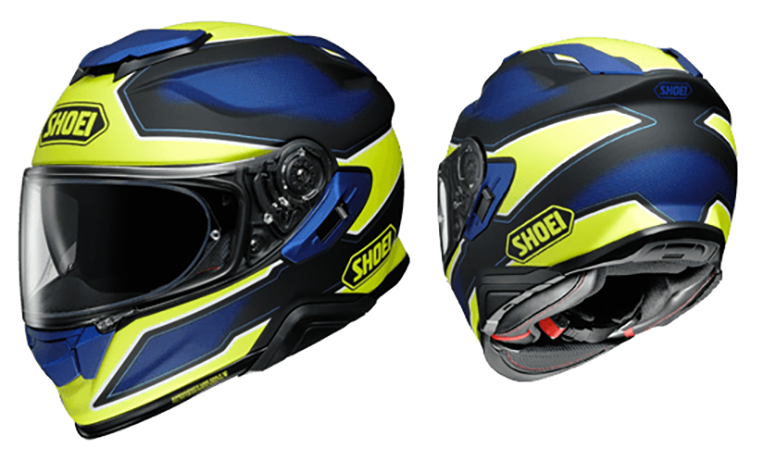
So much of comparison depends on personal choice. I’ll compare some key elements of each helmet so that you’re well educated—and know the right helmet for you—when you go to purchase one.
Motorcycle Helmet Safety
Let’s start with the most important category of all: safety. The primary function of a motorcycle helmet is to protect your head during an accident. In fact, there are two regulatory agencies that have specific requirements to ensure that the helmet is doing its job: The DOT (Department of Transportation) and the ECE (Economic Commission for Europe). There is a third set of standards—“Snell rated”—that is more rigorous than the DOT specs, but not as dialed-in as the ECE. In fact, the ECE standards combine DOT and Snell standards and add some more of their own.
So which helmet is safer? Well, both helmet manufacturers comply with the local safety standards. But once you get past there, it gets a little tricky to identify the best motorcycle helmet. Arai makes sure that the helmet is as safe as can be when a rider goes down. For example, they know that when a helmet collides with an object, it may absorb the full energy of that impact; however, dispersing this energy to different parts of the helmet may be safer. So as they design their helmets, they are considering this, rotational impact, and “glancing off” energy.
Shoei considers other broader elements in their definition of safety. Specifically, Shoei tries to minimize rider discomfort and fatigue. For example, if the helmet is lighter, it doesn’t strain your neck muscles, so you feel more comfortable riding. The way I understand this, if you aren’t fatigued riding, you have a lower chance of dropping the bike. Right?
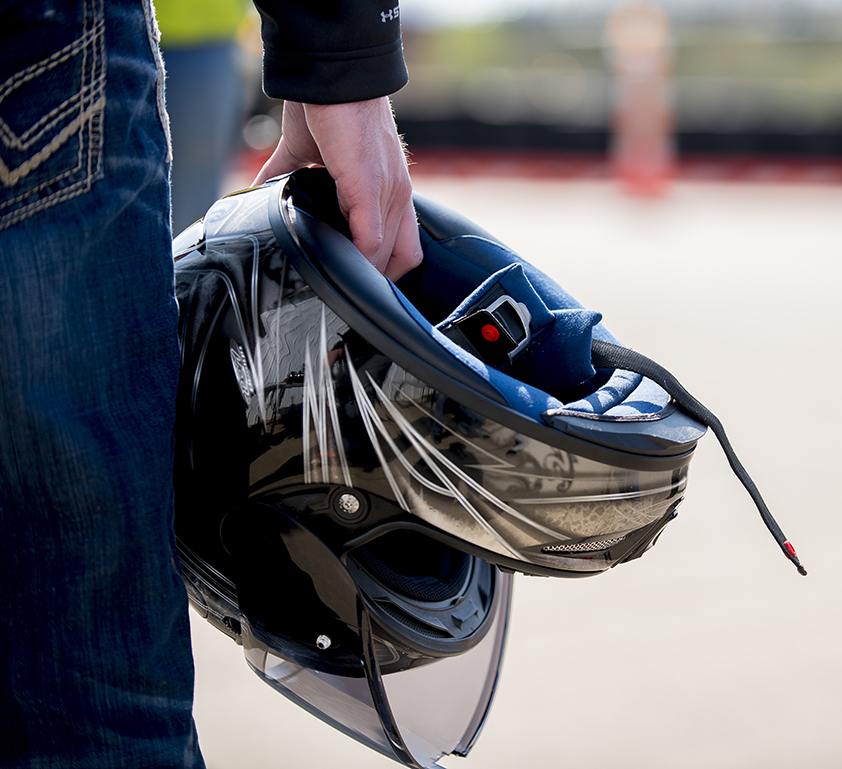
Shoei’s definition of safety allowed them to innovate with the coverless face shield. This enables the plastic visor to be recessed into the helmet without being covered on either side of the helmet. After they created this integrated shield, almost every other helmet manufacturer followed suit, but not Arai. This competing manufacturer stated that this innovation compromises safety.
It has yet to be proven whether or not Arai’s claim is true, but I have to commend them for refusing to make a change because of safety. It subtly raises their status in the market while knocking down their key competitor. Smart move.
Fit of Motorcycle Helmet
This is a tough one, because everyone’s head has a slightly different shape. We suggest trying on various helmets before you choose one that’s right for your noggin.
Arai has more flexibility with their head shape options. The company offers three different options: long oval, round oval, and intermediate oval. Not all head shapes are available in all models so make sure you try the model on to see how it fits. Arai also offers a significant range of internal liner and cheek pad options, so once you find the best fitting model, you can tune the fit by adding thicker or thinner interior components.
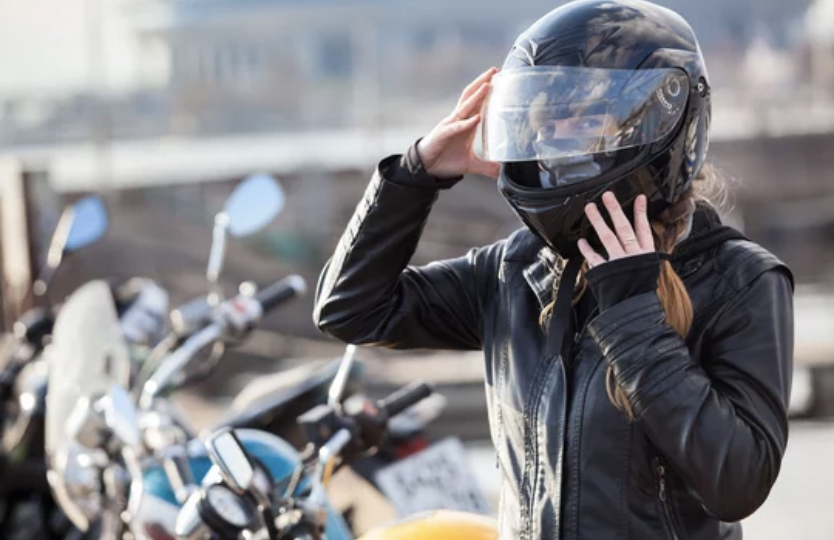
Shoei offers one head shape: intermediate oval. This should fit 75-85% of the American riders’ noodles, but for those with more extreme head shapes, Shoei might not work. Having said that, Shoei does have a variety of interchangeable internal options so you can also fine-tune your helmet to fit you.
Motorcycle Helmet Shell Construction
Each helmet has a shell and a liner. The shell is the outside of the helmet, and the liner is the foam part inside of the helmet.
Both Arai and Shoei have proprietary shell construction methods with multiple layers of fiberglass. Arai builds theirs by hand (yes, every one!) and Shoei uses more modern manufacturing methods.

The difference in the shell design is very difficult to tell apart for someone like me, who doesn’t have a degree in chemical engineering or structural fiberglass properties.
EPS Liner on Motorcycle Helmets
EPS stands for expanded polystyrene, and as stated above, it’s the interior foam part that absorbs the energy during an accident or other impact. When the EPS liner takes on this energy, the cells of the liner are crushed, which absorbs the energy and minimizes the amount that is transferred to your head. However, this liner is more like an airbag and less like a sponge, and once the cells have been compressed once, they can’t absorb energy again.
That’s why everyone suggests that you replace your helmet right after it’s been in an accident.
OK—so how are these brands' liners different from each other?
The Arai liner is a single piece of construction with different densities of EPS in different parts of the helmet. By varying the densities of the materials, the helmet can perform well under different types of conditions. For example, the transfer of energy from a low-speed crash with side impact is much different than a high-impact, top of helmet compression.
Shoei’s EPS features a dual-layer, multi-density design. The top portion of the inner EPS liner is composed of a softer density foam for immediate impact absorption. Shoei continues to innovate, and in 2018, they launched an update to their motorcycle helmet liner. The new version claims to reduce rotational energy by 15%.

Motorcycle Helmet Weight
There are many different helmet models to choose from with these two manufacturers, so it’s important to compare similar models to best understand weight differences.
Our initial review shows that Arai helmets tend to be slightly lighter than Shoei's, but again, you should verify this.
Price of Motorcycle Helmets
Both brands tend to be premium-priced helmets, which is understandable with all of the safety and innovation they bring to the market. Having said that, Arai’s helmets tend to be slightly more expensive than comparable Shoei models.
Conclusion
After buying a motorcycle, your helmet is probably the most important purchase you’ll make. Choosing the best motorcycle helmet for you is paramount.
Safety: Arai wins for potential collisions; but consider Shoei for long rides where fatigue could put you at risk for an accident.
Fit: Arai offers three different fit options for ultimate flexibility.
Shell construction: Tie, they are indistinguishable.
Liner: Tie, both offer options that address safety and comfort.
Weight: Arai is slightly lighter, but varies by model; try on both brand models for comfort.
Price: Shoei is slightly less expensive, though both are premium brands.
The bottom line is that you can't go wrong with either brand. We encourage you to try on different helmets. Experiment. See what suits you the best. Then buy one. Put it on. And ride.